
This article is featured in the 2025 edition of the Appraisal Buzz Magazine. Some other features in our magazine include funny Buzztoon comics, industry trends, as well as crazy stories from appraisers and readers like you! Read all these articles and more in the latest edition HERE. If you want to make sure you are receiving the print version of the Appraisal Buzz magazine in your mailbox, sign up HERE.
John Peets found a disused church and saw what the place could be. In Nashville music circles, Peets is generally known for applying that vision to artists, not architecture. He doesn’t chase trends. He sees the future, even shapes it. But with this ghostly brick skeleton, he was thinking in centuries — both backward and forward in time.
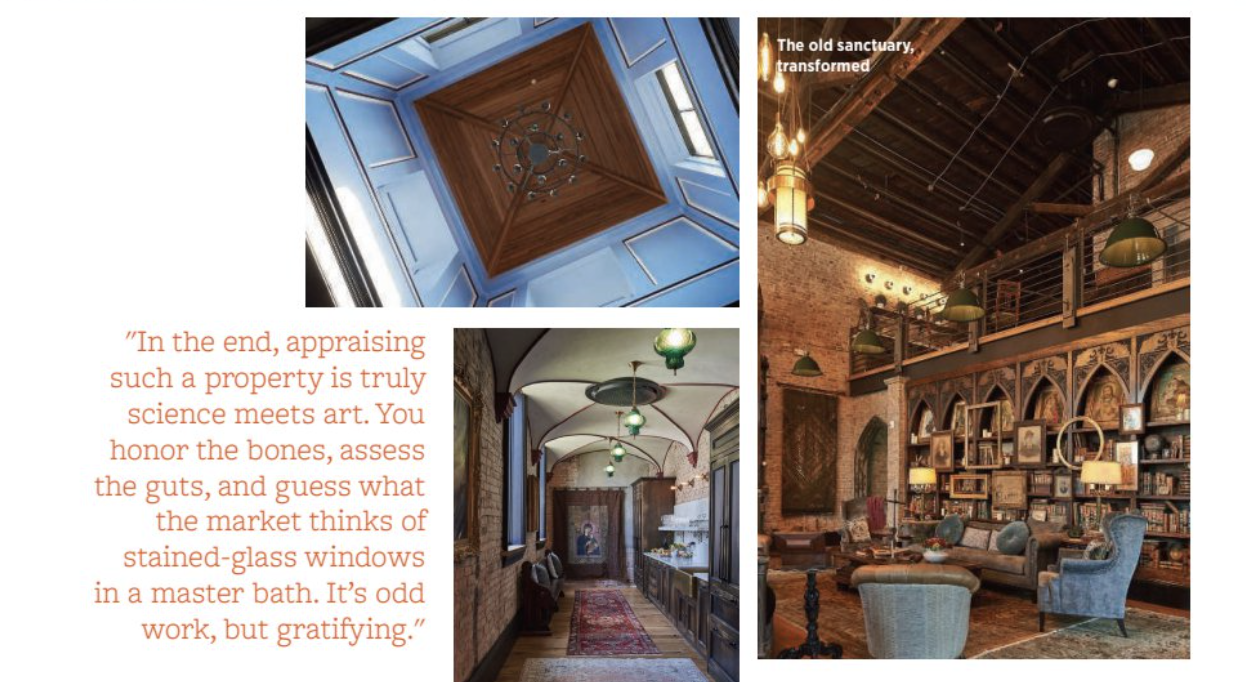
Peets bought the crumbling 1900s-era church, fortified the walls to last longer than most careers, and rebuilt the burned-out bell tower. He converted the Sunday-school classrooms into offices for Q Prime South, his music management outfit. Peets hosts album launch parties and other meetups in the old sanctuary, which is now a resplendent dark-academia masterpiece of stained glass and statuary.
As a guy who loves old things and great design, I was awestruck. But the appraiser in me had to ask different questions: Is this thing financially feasible? Would someone buy it? Is there contributory value here, other than sentiment and dust?
We appraisers tend to cut to the chase: What’s it worth?
Peets had different questions. “How,” he asked himself, “will this building add value to our work?”
He wanted the building to show what set them apart as a company, and he suspected the space itself might help them create music worth hearing. Peets sees this building as “a physical manifestation of what I think good artist management is.” He designed it to be “a dedicated space to creative thought, free thinking, and entertaining.”
Different paths, maybe, but the same destination: a solid office that does the job and, if put on the market, would have value.
But what might that value be?
Appraising an old church-turned-office is like betting on a unicorn that’s entered a horserace: Does the horn add speed? What happens if the animal takes flight? There’s guesswork involved, and little precedent.
This, ladies and gents, is adaptive reuse, where a building’s soul can’t be tallied in a spreadsheet.
The problem is, lenders and underwriters like simplicity. Rows and columns and bland little boxes. But this is a cathedral of creative purpose, a place that values vibe over vacancy rates. Try finding a rental comp for that.
Appraising an adaptive reuse property is not for the faint of heart. But for those who relish a challenge, who enjoy peeling back the layers of history to reveal a property’s potential, and who can crunch the numbers while appreciating the poetry of preservation, adaptive reuse appraisal is one of the most fascinating assignments in the profession. And I’m pretty sure there’s no algorithm alive that’s up to the task.
This first example is, obviously, a commercial property — not an assignment most residential appraisers will ever encounter. However, it does illustrate the nuances of valuing a building that is now what it once wasn’t.
Bringing It Home: McEwen Crossing
I navigate my way into Duck River, Tennessee — though calling it a “way” is generous. More like a polite suggestion of a road that winds into Shady Grove, which itself is so shy it doesn’t bother to appear on most maps. I squint eastward, searching for my destination. It isn’t roadside, of course. That would be too easy. No, it lurks about 500 feet down a gravel drive that soon dissolves into a chert-strewn, two-track path, meandering behind a grove of beech trees.
My assignment? Appraise a two-bedroom, one-bath home on a small rural tract, an assignment so straightforward it practically appraises itself.
But, no. A grand porch encircles the entire house, which is a defiant shade of yellow with cheeky green trim. A massive sign above the front door proclaims, “McEwen Crossing.” The eaves, in their enthusiasm, extend four feet out, sheltering the porch like it was made for loitering.
Then it sinks in: This isn’t just any house. It was a train station once, reincarnated as a single-family home — a phoenix risen from the ashes of locomotion. My assignment shifts. I’m not just appraising a house. I’m measuring how the present holds the weight of history repurposed. The bones are still strong, and the question isn’t whether they can stand — it’s whether they should.
In a more practical world, we might slap a number on the thing and call it a day. But practicality has never been the governing force behind why people want what they want. They want a home, yes, but sometimes they also want a story, a history.
John McEwen is a broker with The McEwen Group in Columbia, Tennessee. They sell large farms, rambling rural houses, and other unique properties. “People love a story,” says McEwen. “That seems to help those properties stand apart.” McEwen says thanks to internet marketing, limited market properties can sell even faster than the “usual humdrum” these days. Yes, these properties may not appeal to the broader market, but people who want quirky will search far and wide for it. As soon as an old church or a train depot comes on the market, these home-hunters are on it.
“I’ve never had many issues selling things like that,” says McEwen. “They’re funky, but they don’t trade very often.” Scarcity can bring value.
House of Whimsy: Anderson Chapel
It used to be up the road, next to Anderson Bend Cemetery. In the 1950s, it got carted a half-mile down the hill, most likely groaning the entire trip. The honest-timber bones of 1870, hand-hewn and heavy with memory, were hoisted to serve as massive collar ties, opening up the vaulted sanctuary to stunning effect. For years, it sat quiet. Empty. Used for storing who-knows-what and forgotten by most.
Then came Jenn Burns and her husband, bless their visionary hearts, who looked past the dust and saw not just a vacant church, but a house waiting to be worshipped. A home, once a vessel for hymns and hallelujahs, now retrofitted for brunch and broadband. This is preservation with a pulse, turning relics into residences and steeples into skylights. Less waste, more charm. Cities like it. Mother Earth applauds. Wallets occasionally smile.
But when it comes to appraising these properties, things get murky.
First, we’re back to the questions: Is this the highest and best use? Legal? Feasible? Profitable? The church may now be a home, but is it the right kind of home for this plot of earth?
Second, function meets fiction. Converting a pulpit space into a powder room sounds cute until the plumbing bill arrives. Lofted ceilings and open floor plans enchant the eye but baffle HVAC systems. Quality matters: Is it built to code, or just to whimsy?
Third, comparables. There aren’t many. Converted churches don’t grow on trees, and Zillow doesn’t have a dropdown for “former house of worship.” So, the appraiser must look at barn conversions, old schools, even repurposed train depots. And then the adjustments: Quirks, character, and that ineffable x-factor.
In the end, appraising such a property is truly science meets art. You honor the bones, assess the guts, and guess what the market thinks of stained-glass windows in a master bath. It’s odd work, but gratifying.
Wrapping It Up: Some Final Thoughts
In adaptive reuse, form is about honoring the soul of the original structure — the weathered brick, soaring beams, or vintage facade that give it character. Function is the reimagining: transforming an old church into a buzzing co-working space, or a train depot into a cozy home. Lean too hard on form, and you risk a beautiful shell with awkward, outdated utility. Focus only on function, and you might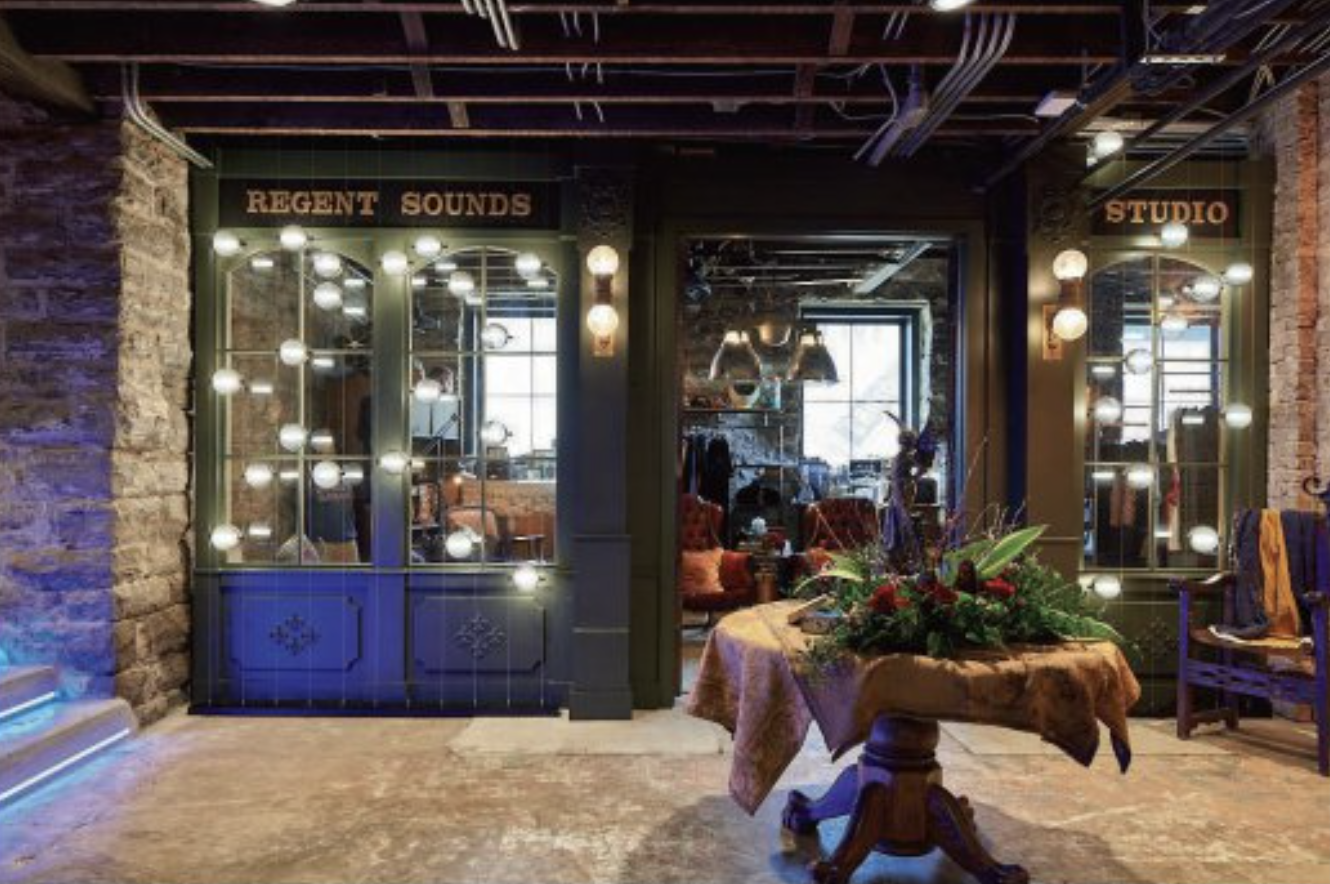 erase the grandeur that made the building worth saving.
The magic of adaptive reuse lies in the balance — preserving the past while designing for the now and tomorrow. When done correctly, appraising such a property may be difficult, but it is doable, and it’s certainly one of the more enjoyable applications of our trade.
Share this article

Written by : Hal Humphreys
Hal is a lifetime appraiser and criminal defense investigator. He teaches courses for appraisers and PIs, hosts the Appraisal Buzzcast and Sound of Pursuit podcasts, and manages day-to-day operations at Storyboard.